


Dubai Business Registration 2026: Total Cost, Timeline & Legal Requirements
 By

The Dubai Opportunity in 2026: Why This Moment Matters
Dubai isn’t just a place on the map—it’s a mindset. It’s where ambition meets infrastructure, where borders dissolve for business, and where your location becomes irrelevant when your opportunity is global. But here’s the truth: setting up a business in Dubai in 2026 is no longer about choosing between a physical office and a dream. It’s about choosing your Dubai.
Whether you’re a tech founder, a logistics innovator, or a consulting powerhouse, Dubai has evolved. New visa structures, digital residency programs, and tax clarity have rewritten the rulebook. Yet entrepreneurs still get lost in the maze of decisions.
This guide cuts through the noise. We’ll answer the 10 questions that actually matter—the ones keeping you up at night.
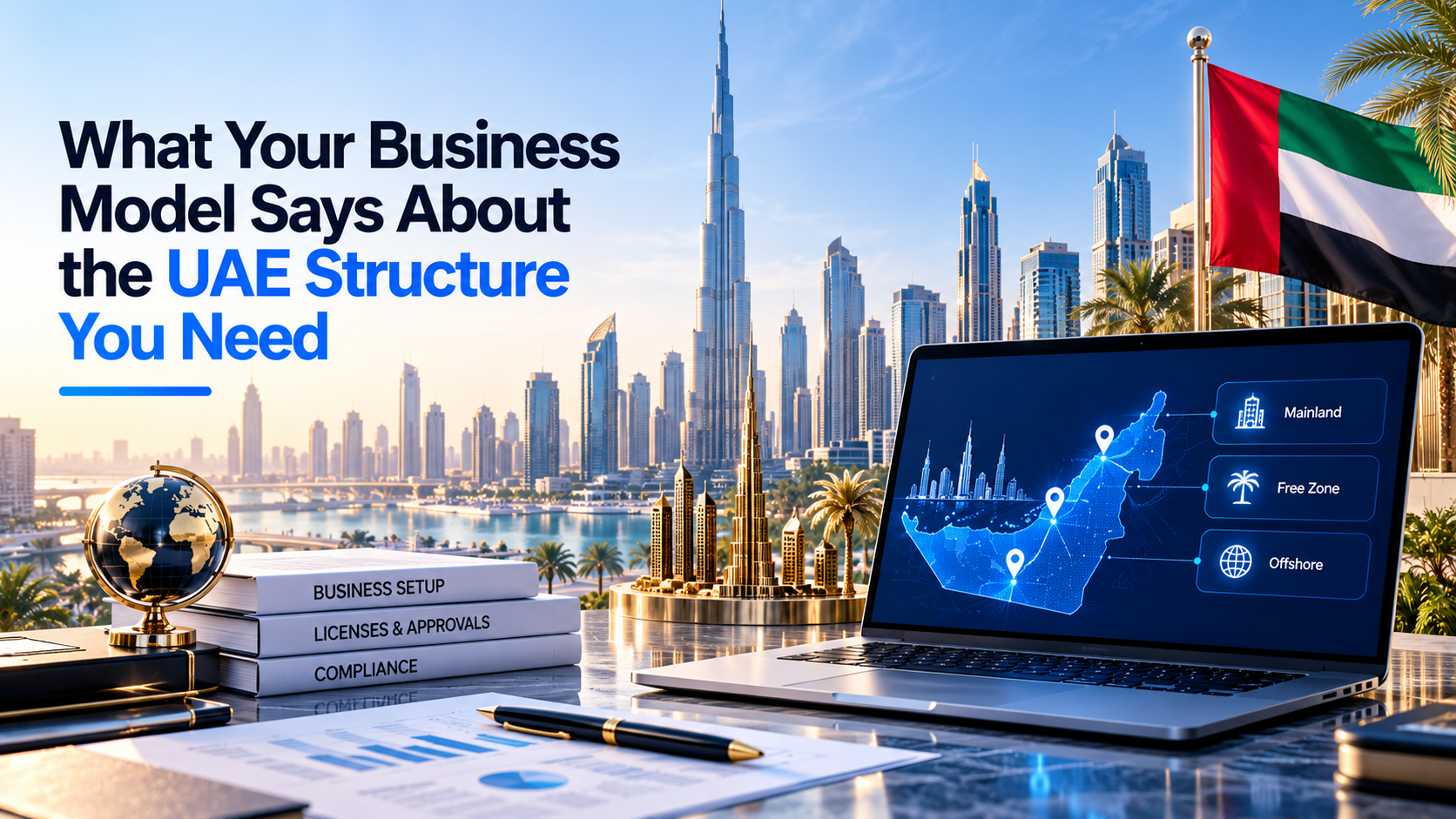
Question 1: Mainland vs. Free Zone – Where Does Your Business Belong?
The Simple Version: Mainland = local and international reach. Free Zone = speed, lower costs, and often better banking.
The Strategy:
Mainland Dubai is your play if you want to operate across the entire UAE market, sell to local businesses, or establish a genuine UAE presence. The trade-off? You’ll need a local UAE sponsor (typically holding 51% ownership) or must structure as a branch with documented authority from your parent company. Costs run higher, but your market access is unlimited.
Free Zones (DIFC, DMCC, DAFZA, and others) are built for international traders. You get 100% foreign ownership, streamlined banking, and approval in days instead of months. The catch? If you’re a beauty boutique or a bakery targeting the Dubai retail market, you’re working with geographic constraints. Free zones are freedom if you’re exporting, consulting globally, or running a digital business. They’re a cage if you need local market access.
Smart Play for 2026: Consider your revenue geography, not just your business type. Tech startup serving Asia? Free Zone wins. Trading company importing goods into the GCC region? Mainland with strategic sponsorship beats Free Zone restrictions.
Question 2: The Real Cost of Doing Business – Beyond the License Fee
Here’s what most guides skip: the license fee is just the appetizer.
The Actual Costs You’ll Face:
- License & Registration: AED 1,000–3,000 (mainland), AED 500–2,000 (free zone)
- Office Space: AED 1,500–5,000/month virtual, AED 3,000–15,000/month physical (depends on location)
- Visas (Owner + Team):
- Owner visa: AED 200–500 (renewable annually)
- Employee visas: AED 1,000–1,500 per person (includes medical, insurance)
- Dependent visas: AED 800–1,200 per person
- Bank Account Setup: Often free, but expect fees for transactions (AED 5–25 per transfer)
- E-Channel & DEWA: AED 1,000–2,000 annually
- Compliance & Legal: AED 2,000–5,000 for setup documentation
Total first-year investment for a lean startup: AED 15,000–30,000 (USD 4,000–8,000). For a scaled operation with employees and physical presence: AED 50,000–100,000+.
The Money-Saving Secret: Digital residency models and virtual office setups can cut your costs in half while maintaining legitimacy. More on this below.
Question 3: Legal Structure & Business Activity – Getting the Architecture Right
You have four main choices:
- Limited Liability Company (LLC): The standard. Requires local sponsorship on mainland; full foreign ownership in free zones. Best for: Services, trading, consulting.
- Branch Office: You’re extending a foreign parent company. Lower setup costs, simpler structure. Best for: International firms entering UAE market.
- Sole Proprietorship: Requires visa sponsorship for an Emirati partner (usually nominal). Cost-effective but operationally limited. Best for: Freelancers, contractors.
- Free Zone Company (RAK, DMCC, DIFC): 100% foreign ownership, streamlined operations, separate tax regime. Best for: Global-facing businesses, e-commerce, fintech.
The Business Activity Trap: Your chosen activity code (provided by authorities) determines what you can legally do. Operating outside your code isn’t just risky—it’s illegal. Choose conservatively. A consultancy can pivot. A licensed restaurant cannot become a tech startup without re-licensing.
2026 Trend: Some free zones are now allowing “flexible” activity codes for startups, letting you operate across multiple sectors during your first year. Check your chosen zone’s flexibility clause.
Question 4: Visa Requirements – The Numbers You Need to Know
For the Owner:
- 3-year or renewable annual visa
- Requires proof of capital investment (typically AED 250,000+) or business registration
- Cost: AED 200–500 annually
- Timeline: 5–10 working days
For Employees:
- Requires employment contract and minimum salary (AED 2,000–3,000)
- Employer sponsors (not employee)
- Cost: AED 1,000–1,500 per person per year
- Timeline: 10–15 working days
For Dependents:
- Spouse and children require separate visas
- Requires proof of accommodation and income
- Cost: AED 800–1,200 per person annually
- Timeline: 7–10 working days
The 2026 Game-Changer: Golden Visa programs (3, 5, and 10-year visas for investors) are now available for entrepreneurs investing AED 500,000+ or those with proven business success. It’s a long-term play but eliminates annual renewal stress.
Question 5: Banking & Finance – Opening an Account Remotely Is Now Real
The Historical Pain: Opening a corporate bank account in Dubai used to require in-person visits, stacks of documents, and friendly relationship managers.
2026 Reality: Most major banks (Emirates NBD, FAB, DIB, ADIB) now offer 70–80% of the account-opening process digitally.
What You’ll Need:
- Business registration documents
- Board resolution (if applicable)
- Passport copy and visa copy
- Address proof
- Source of funds documentation
- Business plan or memo
The Ease Factor:
Free Zone companies: 3–5 working days, often fully digital Mainland companies: 5–10 working days, may require one visit Branch offices: 2–3 days, streamlined process
Banking Costs to Budget:
- Account opening: Often free
- Monthly maintenance: AED 10–50
- Transfer fees: AED 5–25 (domestic), AED 20–50 (international)
- Card issuance: AED 50–100
Pro Tip: Islamic banks (DIB, ADIB) are increasingly competitive and offer unique structures for certain business types. Compare, don’t assume.
Question 6: Taxation – The Myth of “No Tax” and the Reality of 2026
The Old Story: Dubai = no corporate tax = paradise.
The New Story (as of 2023 onward): UAE implemented a 9% Corporate Income Tax on profits above AED 375,000.
What This Means for You:
- Profits below AED 375,000: 0% tax (this is real)
- Profits AED 375,000–500,000: Graduated to 9%
- Profits above AED 500,000: Full 9%
Small Business Relief: If your revenue is below AED 3 million and you’re not in designated sectors, you may qualify for deferrals or relief. Check eligibility annually.
VAT (5%): Applies to most goods and services. You collect it from customers and remit to authorities. It’s administrative, not a direct cost, but manage your VAT reconciliation carefully—it’s a compliance requirement.
The Smart Angle: Structure matters. Branch offices have different tax treatment than LLCs. Free Zone companies often operate under separate regimes. A strategic structure can legally optimize your tax position by 2–5%.
Question 7: Market Access – Can You Actually Do Business Here?
This is where Free Zone vs. Mainland gets real.
Free Zone Reality:
- You can serve clients worldwide (100% freedom)
- You can have clients in UAE, but must go through specific channels
- You cannot directly retail goods to UAE consumers without proper licensing
- You can subcontract to UAE-based traders
Mainland Reality:
- Full access to UAE market
- Can establish B2C relationships
- Can operate retail, hospitality, services without restrictions
- Can hire and manage teams across all sectors
2026 Trend: Some free zones have introduced “hybrid” memberships allowing limited mainland market access. DMCC, for instance, now permits certain sectors to operate beyond zone boundaries.
Your Decision Framework: If your revenue is 80%+ international or B2B (business-to-business), Free Zone wins on cost and simplicity. If you need retail presence, local clients, or consumer-facing operations, Mainland is non-negotiable.
Question 8: Office Space – Virtual, Flexi, or Forever?
The Misconception: You need a massive office to be legitimate.
The Truth in 2026: You need an address.
Your Options:
- Virtual Office (AED 1,500–2,500/month)
- Address for licensing and mailing
- No physical workspace
- Perfect for: Consulting, digital agencies, e-commerce
- Limitation: Can’t receive clients
- Flexi-Desk/Hot-Desking (AED 2,000–4,000/month)
- Shared workspace, book as needed
- Professional meeting rooms available
- Perfect for: Startups, growing teams, hybrid operations
- Growing trend: Over 40% of Dubai businesses now use flex arrangements
- Physical Office (AED 3,000–15,000/month)
- Dedicated space, your brand on the door
- Full control over environment
- Perfect for: Customer-facing businesses, large teams, long-term anchors
- Premium location (Downtown, DIFC): AED 8,000–20,000+
- Home-Based (AED 0 if you have a UAE residence)
- Some free zones and sectors allow home-based operations
- Lowest cost, highest flexibility
- Limitation: Cannot serve clients from home in most jurisdictions
The 2026 Play: Start with a virtual address (AED 1,500/month) and upgrade to flexi-desk (AED 3,000/month) if you need client meetings. This hybrid approach costs AED 54,000 annually and covers 95% of startup scenarios. The office can wait.
Question 9: Required Documents – The Checklist That Actually Matters
Before You Begin:
- Valid passport (6+ months validity)
- Visa or visa sponsorship documents
- Personal bank statements (last 6 months)
- Educational qualifications (if relevant)
- No Objection Certificate from current employer (if relocating)
For Business Registration:
- Proof of capital investment (bank transfer receipt)
- Business plan or memorandum (1–2 pages minimum)
- Articles of Association/Memorandum of Understanding
- ID copies of all shareholders
- Passport and visa copies
- Proof of address (lease, utility bill, residency)
For Banking:
- Board resolution (authorize signatories)
- Certificate of incorporation
- Commercial license
- Trade license
- ID and visa copies
The Document Attestation Reality: For mainland companies, most documents need attestation by the UAE Embassy in your home country. For free zone companies, this is often waived. Timeline: 2–4 weeks for attestation; plan accordingly.
2026 Update: Many jurisdictions now accept digital attestation for certain documents. Check with your local embassy—it saves 2 weeks.
Question 10: Timeline & Process – From Dream to Doors Open
Best-Case Scenario (Free Zone, Digital Residency Model):
- Week 1: Documents submitted
- Week 2: Preliminary approval
- Week 3: Final processing
- Week 4: License issued
- Total: 2–4 weeks
Standard Scenario (Free Zone, Full Compliance):
- Week 1: Document verification
- Week 2: Sponsor documentation
- Week 3–4: Authority review
- Week 4–5: License issued
- Week 5–6: Bank account, visa setup
- Total: 4–6 weeks
Mainland Scenario (With Local Sponsorship):
- Week 1–2: Sponsor agreements, MOA preparation
- Week 2–3: Document collection, attestation
- Week 3–4: Authority submission
- Week 4–6: License review and issuance
- Week 6–8: Visa processing
- Total: 6–8 weeks
The 2026 Accelerator: Digital residency model. This is new. You register online, provide digital documents, and get partial business rights within 2 weeks. Full setup follows, but you can start operational immediately. Ideal for tech startups and digital-first businesses.
The 2026 Game-Changer: Digital Residency & Hybrid Models
Here’s what’s transforming Dubai business setup right now.
Digital Residency allows entrepreneurs to:
- Register business online, no physical office required initially
- Operate digitally while physical setup processes (2-week vs. 6-week advantage)
- Maintain lower costs (no office mandate for first 12 months)
- Scale gradually as revenue justifies physical expansion
Who Benefits:
- SaaS companies (software-as-a-service)
- Digital agencies and consulting
- E-commerce and dropshipping
- Fintech startups
- Remote-first teams
The Cost Advantage: A digital residency model can cost 40–50% less in year one than traditional setups. You’re paying for legitimacy and market access, not real estate you don’t need yet.
The Recorporate Checklist: Your 30-60-90 Day Action Plan
Week 1–2: Foundation
- Decide: Mainland or Free Zone?
- Choose business structure (LLC, Branch, Sole Prop, Free Zone entity)
- Gather documents (passport, visa, bank statements, business plan)
- Select jurisdiction (DMCC for trading, DAFZA for logistics, mainland for retail, etc.)
Week 3–4: Preparation
- Arrange attestation if needed
- Identify local sponsor (if mainland)
- Open a personal bank account for initial capital transfer
- Finalize office solution (virtual, flexi, or physical)
Week 5–6: Submission
- Submit registration application
- Transfer initial capital
- Pay license and registration fees
- Apply for visa sponsorship
Week 7–8: Activation
- Obtain business license
- Apply for corporate bank account
- Complete visa processing
- Set up compliance framework (tax, VAT, payroll)
Month 3: Scale
- Hire first employee (if needed)
- Establish supplier/client relationships
- Register for VAT (if exceeding threshold)
- Plan year-2 expansion
Common Mistakes (And How to Avoid Them)
Mistake 1: Choosing the Wrong Jurisdiction Wrong: Picking free zone because it’s “cheaper” without considering market access needs. Right: Map your revenue sources first. If 80%+ is international, free zone. If you need UAE clients, go mainland.
Mistake 2: Underestimating the Visa Cost Wrong: Budgeting only for owner visa, forgetting dependents and staff. Right: Budget AED 2,000 per family member + AED 1,200 per employee annually.
Mistake 3: Overlooking Tax Implications Wrong: Assuming zero corporate tax still applies. Right: Plan for 9% corporate tax on profits above AED 375,000 from day one.
Mistake 4: Choosing Office Before Operations Wrong: Signing a 3-year lease before validating the business model. Right: Start virtual (AED 1,500/month), upgrade to flexi (AED 3,000/month) after 6 months of revenue.
Mistake 5: Missing Attestation Timelines Wrong: Submitting documents two weeks before you want to launch. Right: Start attestation process 8 weeks before planned launch.
The Bottom Line: Why Dubai in 2026 Is Different
Dubai isn’t just open for business—it’s obsessed with making business work. The 9% tax is intentional, not punitive. Digital residency is a real option, not a half-measure. Banking is genuinely digital now. Visas are processable in weeks, not months.
Your decision isn’t between mainland and free zone anymore. It’s between starting lean (digital residency, virtual office, flex desk) and scaling smart (physical presence, team building, market expansion).
The entrepreneurs winning in Dubai right now aren’t those who had the biggest office. They’re those who understood their market, chose the right jurisdiction, and kept costs lean while validating the model.
You have every piece of information to make this decision. The next step? Act.
Ready to Set Up in Dubai? Here’s What Recorporate Does
At Recorporate, we’ve helped hundreds of entrepreneurs navigate this exact journey. We handle the jurisdiction selection, document preparation, visa coordination, and compliance setup so you can focus on building your business.
Whether you’re choosing between mainland and free zone, optimizing your tax structure, or navigating the visa maze—we’ve seen every scenario and have a playbook for it.
Let’s talk about your Dubai opportunity.