How Do You Choose the Right Jurisdiction for a UAE Holding Company?
A UAE holding company is generally established to own shares in other businesses, manage investments, or hold assets such as intellectual property and property interests. It can help entrepreneurs, investors, and business groups organise their ownership structure and manage multiple investments under a suitable corporate framework.
The UAE offers several options for establishing a holding company, including mainland jurisdictions, free zones, financial centres, and offshore structures. However, each option has different regulations, operating conditions, and requirements.
Choosing the right jurisdiction for a UAE holding company requires understanding what the company will own, how it will operate, and what the owners expect to achieve in the long term. Here are the key factors to consider.
1. Understand the Purpose of Your Holding Company
Before selecting a jurisdiction, define the main purpose of the holding company. Some businesses establish holding companies to own shares in subsidiaries, while others use them to manage investments, intellectual property, or other permitted assets.
For example, an entrepreneur managing several businesses may want a parent company that holds ownership interests in different operating companies. An investor may require a separate structure to hold selected investments.
Understanding the intended purpose helps identify the appropriate legal structure and licensing category. It is also important to distinguish between a passive holding company and an entity that will provide management services or conduct commercial activities.
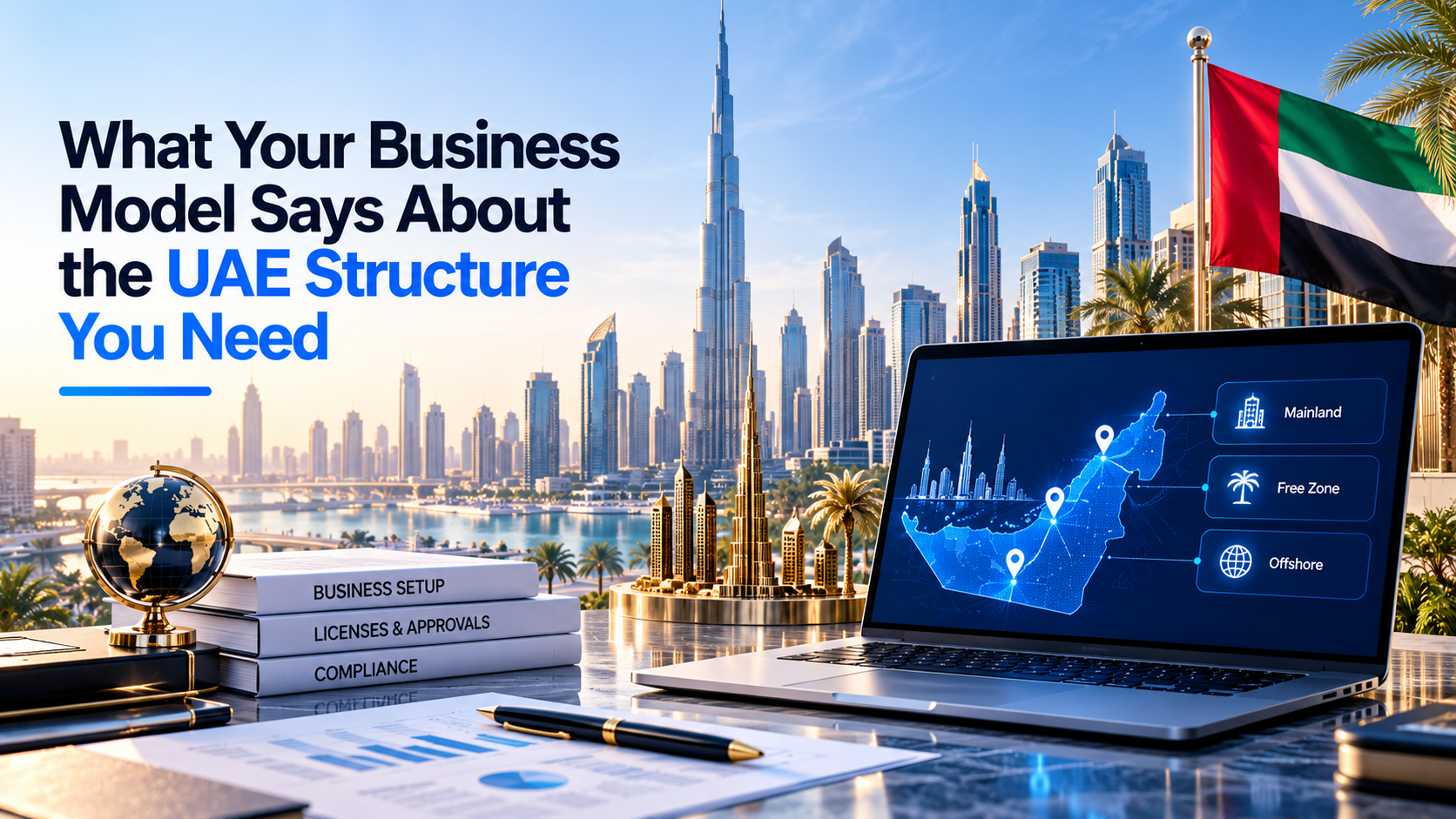
2. Compare Mainland, Free Zone, and Offshore Options
The UAE provides different company formation routes, and each may suit a different holding company requirement.
Mainland Company: A mainland structure may be suitable for businesses that need a UAE-based operating presence or intend to conduct permitted activities within the local market. The company must meet the relevant licensing and regulatory requirements.
Free Zone Company: Free zones offer different company structures and licensing options. Some authorities provide holding company or investment-related activities. The suitability depends on the specific free zone, permitted activities, and intended ownership arrangements.
Offshore Company: Offshore structures may be considered for certain international asset and shareholding arrangements where a local operating presence, employees, or residence visas are not required. Their permitted activities and limitations depend on the relevant offshore authority.
The choice should be based on the company's actual requirements rather than assuming that one structure is suitable for every investor.
3. Evaluate Specific UAE Jurisdictions
Once you understand the available structures, compare individual jurisdictions that offer holding company or special-purpose vehicle options.
Some commonly considered options include:
DMCC: May be suitable for businesses seeking a free zone environment with holding company-related licensing options.
DIFC: Offers a financial centre environment and prescribed company structures for qualifying purposes.
ADGM: Provides special-purpose vehicle options for eligible holding and asset-ownership arrangements.
RAK ICC: Offers international company structures that may be considered for holding shares and other permitted assets.
JAFZA Offshore: Provides an offshore company registration option for certain international ownership and asset-holding purposes.
Each jurisdiction has its own eligibility criteria, documentation, service-provider requirements, fees, and permitted activities. Investors should verify the current rules with the relevant authority before selecting a structure.
4. Consider Ownership and Asset Requirements
A holding company may own shares in subsidiaries, investments, or other assets. However, not every jurisdiction permits every type of ownership arrangement.
Before registration, consider:
Whether the company will hold UAE-based or international subsidiaries.
Whether it will own shares in mainland or free zone companies.
Whether property or intellectual property will be held.
Whether there will be multiple shareholders or corporate shareholders.
Whether investors require particular governance or ownership arrangements.
It is important to confirm that the proposed holding company can legally own the intended assets and that the relevant subsidiary or asset-owning authority accepts the structure.
5. Review Tax and Compliance Responsibilities
Tax planning is another important factor when choosing a UAE holding company jurisdiction. Business owners should understand the UAE corporate tax framework and how it applies to the proposed company.
Certain dividends and capital gains from qualifying shareholdings may benefit from the UAE's participation exemption, subject to specific legal conditions. These may include requirements relating to ownership percentage, holding period, and the relevant tax status of the subsidiary.
However, establishing a holding company does not automatically mean that all its income is tax-exempt. Registration, filing, accounting, and other applicable compliance obligations must also be considered.
Businesses should obtain professional tax advice before relying on any expected tax treatment.
6. Check Banking, Office, and Operational Requirements
A holding company may need a corporate bank account to receive dividends, manage investments, and handle other permitted financial transactions. Banks generally conduct due diligence and may request information about shareholders, beneficial owners, source of funds, business purpose, and expected transactions.
Office and staffing requirements also differ between jurisdictions. Some structures require registered premises or a local service provider, while certain offshore and special-purpose vehicles have restrictions on employing staff or conducting day-to-day business operations.
Consider whether your company needs a physical office, residence visas, employees, or an ongoing UAE management presence before making a decision.
7. Plan for Long-Term Business and Investment Goals
The right jurisdiction should support more than the initial company registration. Investors should consider how the holding company may be used in the future.
For example, the business may eventually acquire additional subsidiaries, bring in new investors, transfer ownership, restructure its group, or plan for succession.
Reviewing these possibilities early can help business owners select a structure that supports their long-term objectives and avoids unnecessary restructuring later.
How ReCorporate Can Help With UAE Holding Company Setup
Choosing a suitable jurisdiction requires an understanding of company formation procedures, permitted activities, ownership requirements, documentation, and ongoing responsibilities.
ReCorporate provides UAE company formation and business setup services to help entrepreneurs and investors explore available establishment options. From mainland company formation and free zone company setup to offshore company registration, the team can assist with understanding relevant setup requirements.
ReCorporate also provides support with business licensing, office solutions, bank account assistance, residency visas, PRO services, and compliance support, depending on the selected structure and applicable requirements.
For investors planning to establish a holding company in the UAE, professional guidance can help organise the initial steps and identify the questions that should be reviewed before registration. Legal, corporate structuring, and tax advice may also be required for more complex investment arrangements.
Conclusion
Choosing the right jurisdiction for a UAE holding company involves evaluating the company's purpose, asset ownership, subsidiary arrangements, tax position, banking needs, and long-term plans.
Mainland, free zone, financial centre, and offshore structures each serve different requirements. Taking time to compare their legal and operational conditions can help investors make informed decisions and establish a suitable foundation for managing their business interests.
With professional setup assistance from ReCorporate, entrepreneurs and investors can explore UAE holding company formation options and take informed steps towards organising their investments and business structure.
Frequently asked questions (FAQs)
1. What is a holding company in the UAE?
A holding company is an entity established primarily to own shares in other companies or hold certain assets and investments. Its permitted activities depend on its legal structure and licensing jurisdiction.
2. Which jurisdiction is best for setting up a holding company in the UAE?
There is no single best jurisdiction for every investor. Mainland, free zone, DIFC, ADGM, RAK ICC, and JAFZA Offshore may suit different ownership, asset-holding, operational, and investment requirements.
3. Can a UAE holding company own shares in other companies?
Yes, subject to the applicable laws, licensing conditions, and ownership requirements of the holding company's jurisdiction and the companies in which it intends to invest.
4. What is the difference between a holding company and an operating company?
A holding company generally owns shares or assets, while an operating company conducts day-to-day commercial activities such as selling products or providing services. Some structures may have additional permitted activities, depending on their licence.
5. Does a UAE holding company have to pay corporate tax?
A UAE holding company may be subject to corporate tax requirements. Certain qualifying dividends and capital gains may be exempt under the participation exemption, provided the applicable conditions are met.