
Dubai Business Setup in 2026
 By
Dubai Business Setup in 2026: The Definitive Guide With Official Government Links & Real-World Clarity
Setting up a business in Dubai in 2026 is no longer about “who you know.”
It’s about understanding the system, using the right government platforms, and structuring correctly from day one.
To make this guide genuinely useful (and SEO-strong for Google and Bing), we’ve included official UAE government websites and authorities you may interact with during your Dubai business setup journey.
This is the same roadmap used by ReCorporate when advising founders, investors, and global companies.
Why Dubai Business Setup in 2026 Is Different
Dubai has matured.
-
Corporate Tax rules are now stable
-
Banking expectations are clear
-
Digital and remote-friendly models are accepted
-
Mainland and Free Zone rules are better defined
This means less guesswork, but also less tolerance for poor planning.
If you want to set up a business in Dubai in 2026, the following 10 questions will define your success.
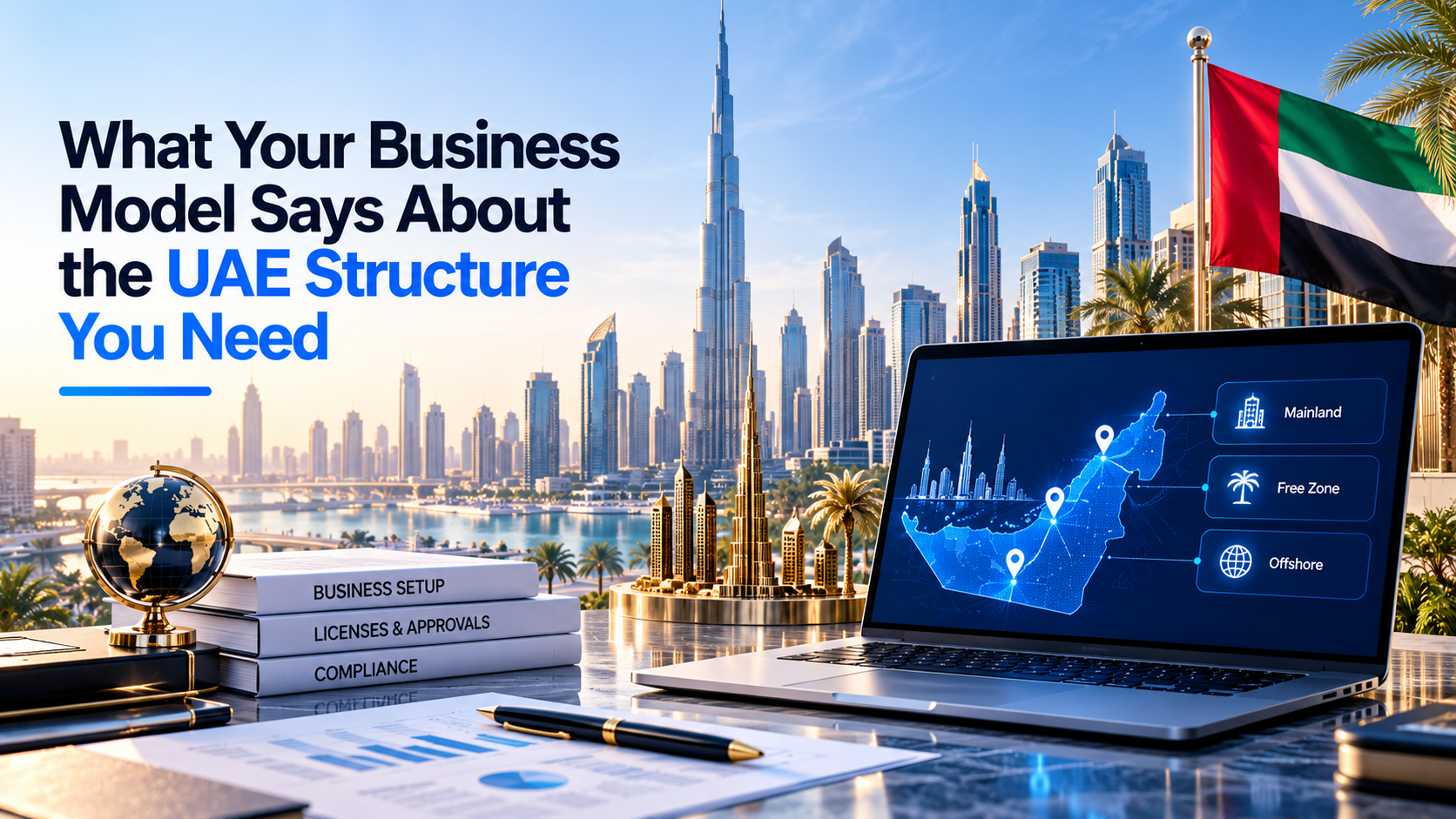
1. Mainland vs Free Zone in Dubai – Which Is Better in 2026?
Target keywords:
Dubai mainland vs free zone, mainland vs free zone Dubai 2026, business setup Dubai
Mainland Company Setup in Dubai
A mainland company allows you to:
-
Trade directly anywhere in the UAE
-
Work with government and semi-government clients
-
Open offices across Dubai and other Emirates
-
Scale without strict visa limits
In 2026:
-
Most activities allow 100% foreign ownership
-
A traditional local sponsor is no longer required for most sectors
-
Physical office space is usually mandatory
Free Zone Company Setup in Dubai
Free zones are ideal for:
-
International businesses
-
Digital services
-
Consulting, IT, marketing, trading, and holding companies
Key advantages:
-
Faster setup
-
Lower initial cost
-
Flexi-desk or digital office options
-
Simple renewals
Limitations:
-
Direct mainland trading may require a distributor or branch
-
Some activities have banking restrictions
2026 Insight:
If your revenue comes mainly from outside the UAE, a free zone is often the smartest choice. If your clients are inside the UAE, mainland works better.
2. Total Cost of Business Setup in Dubai (Including Hidden Fees)
Target keywords:
Cost of business setup in Dubai, Dubai company setup cost 2026
Many founders are shocked when the final bill is higher than expected—not because Dubai is expensive, but because costs were not explained properly.
Common Costs in 2026
-
Trade license fee
-
Establishment card
-
Immigration & e-channel registration
-
Investor or employee visas
-
Medical test and Emirates ID
-
Office or flexi-desk
-
Bank account charges
-
Renewal and compliance fees
Important:
A cheap license with high renewal or visa costs is never a good deal.
A proper setup plan always includes:
-
Year 1 total cost
-
Annual renewal cost
-
Optional vs mandatory expenses
3. Choosing the Right Legal Structure and Business Activity
Target keywords:
Dubai business legal structure, LLC company Dubai
Your legal structure affects:
-
Banking approval
-
Tax position
-
Visa eligibility
-
Business credibility
Common Legal Structures in Dubai
-
LLC (Limited Liability Company) – Most popular and flexible
-
Branch Office – For foreign companies expanding into Dubai
-
Sole Establishment – Limited use cases
-
Holding Company – Asset and investment management
Business Activity Matters More Than You Think
Banks and regulators now check:
-
Whether your activity matches your revenue
-
Whether your contracts align with your license
-
Whether your transactions make sense
In 2026, choosing the wrong activity is one of the top reasons for bank account rejection.
4. Visa Requirements for Dubai Business Owners in 2026
Target keywords:
Dubai investor visa, Dubai business visa 2026
Types of Visas
-
Investor / Partner Visa
-
Employee Visa
-
Dependent Visa (family)
Visa availability depends on:
-
Jurisdiction (mainland or free zone)
-
Office size
-
Business activity
Good news for 2026:
Many founders operate with minimal physical presence, especially in digital and international businesses.
5. Corporate Bank Account Opening in Dubai (Reality Check)
Target keywords:
Dubai corporate bank account, open business bank account Dubai
Banking in Dubai is not difficult—but it is strict.
Banks Expect:
-
Clear business model
-
Transparent ownership
-
Real contracts or revenue logic
-
Clean compliance history
Remote account opening is possible in some cases, but:
-
Not all nationalities qualify
-
Not all industries are accepted
-
Fintech and EMI solutions are often used initially
Smart founders plan banking before licensing.
6. Corporate Tax and VAT in Dubai – Explained Simply
Target keywords:
Dubai corporate tax 2026, UAE corporate tax 9%
Corporate Tax
-
0% on taxable profits up to AED 375,000
-
9% on profits above that
-
Some free zone companies may qualify for 0% on qualifying income
VAT (Value Added Tax)
-
Standard rate: 5%
-
Applies mainly to UAE-based supplies
-
Registration depends on turnover
Small Business Relief
-
Available for eligible businesses
-
Reduces tax burden for startups
Key Advantage Still Exists:
No personal income tax in the UAE.
7. Market Access – Where Can You Trade From Dubai?
Target keywords:
Dubai market access, trade from free zone Dubai
-
Mainland companies can trade freely within the UAE
-
Free zone companies trade internationally with ease
-
Hybrid structures are increasingly popular in 2026
Choosing the wrong structure can limit your growth later.
8. Office Space Requirements in Dubai (Physical vs Digital)
Target keywords:
Dubai office requirement, flexi desk Dubai
Office Options
-
Physical office
-
Flexi-desk
-
Virtual or digital office (limited cases)
Authorities now check economic substance, especially for tax and banking.
Digital setups are faster—but only when done correctly.
9. Documents Required for Business Setup in Dubai
Target keywords:
Documents for Dubai company setup
Typically required:
-
Passport copies
-
Visa or entry stamp
-
Business plan (for banking)
-
MOA / shareholder documents
-
UBO declaration
Attestation depends on your structure and banking needs.
10. Timeline for Company Registration in Dubai
Target keywords:
Dubai company setup timeline, how long does it take to open a company in Dubai
Average Timelines in 2026
-
Free Zone: 7–14 working days
-
Mainland: 2–4 weeks
-
Banking: parallel process (varies)
Delays usually happen due to:
-
Incorrect activity selection
-
Incomplete documents
-
Poor banking preparation
Key Dubai Business Setup Trends for 2026
-
Digital residency models are growing
-
Banking-first planning is essential
-
Corporate tax clarity has reduced risk
-
Mainland rules are becoming more flexible
-
Compliance matters more than speed
Final Thoughts: Dubai Rewards Planning, Not Guesswork
Dubai in 2026 is not about shortcuts.
It is about clarity, structure, and long-term thinking.
With the right setup:
-
You reduce tax exposure
-
Improve banking success
-
Scale globally with confidence
This is exactly how ReCorporate approaches business setup—not as a license sale, but as a foundation for growth.
If you plan properly, Dubai is not just a location.
It becomes a strategic advantage.

Why Government Portals Matter More in 2026
Dubai has moved aggressively toward:
-
Centralized digital licensing
-
Online approvals
-
Automated immigration & tax systems
-
Compliance-linked banking
This means official portals are now part of your business life, not just setup paperwork.
Knowing which authority does what saves weeks.
1. Mainland vs Free Zone – Official Authorities You’ll Deal With
Mainland Business Setup (Dubai)
Mainland companies are regulated by:
Department of Economy and Tourism (DET)
Official website:
👉 https://www.dubaided.gov.ae
DET handles:
-
Trade name approval
-
Business activity approval
-
Mainland trade licenses
-
Amendments & renewals
If your goal is:
-
UAE market access
-
Government contracts
-
Physical office operations
This authority is unavoidable.
Free Zone Business Setup (Dubai & UAE)
Each free zone has its own authority. Popular ones include:
-
IFZA
👉 https://ifza.com -
DMCC
👉 https://www.dmcc.ae -
Dubai Silicon Oasis Authority
👉 https://www.dsoa.ae
Free zones control:
-
Licensing
-
Visa allocation
-
Office / flexi-desk rules
-
Renewals
2026 Tip:
Free zone rules differ significantly. Banking success often depends on which free zone you choose—not just cost.
2. Immigration, Visas & Emirates ID – Government Portals
Every business owner or employee visa touches the following authorities:
Immigration & Residency
General Directorate of Residency and Foreigners Affairs
👉 https://www.gdrfad.gov.ae
Handles:
-
Entry permits
-
Residence visas
-
Visa status changes
Emirates ID & Biometrics
Federal Authority for Identity, Citizenship, Customs & Port Security
👉 https://icp.gov.ae
Responsible for:
-
Emirates ID issuance
-
Biometrics
-
Visa-linked identity records
In 2026, digital residency models still rely on these systems, even if physical presence is reduced.
3. Corporate Tax & VAT – Official UAE Tax Authority
This is one of the biggest changes founders must understand.
UAE Corporate Tax & VAT
Federal Tax Authority (FTA)
👉 https://tax.gov.ae
The FTA governs:
-
Corporate Tax registration
-
VAT registration & filings
-
Small Business Relief eligibility
-
Compliance & penalties
Key 2026 Tax Rules (Officially Confirmed)
-
0% Corporate Tax up to AED 375,000 taxable income
-
9% above that threshold
-
VAT at 5% where applicable
-
Free zone benefits depend on qualifying income
Important:
FTA registration is now digitally linked to licensing data. Mistakes show up fast.
4. Banking & Financial Compliance – Why Authorities Matter
While banks are private institutions, their compliance rules are aligned with:
-
UAE Central Bank regulations
-
AML & KYC frameworks
-
Economic substance requirements
Central Bank of the UAE
👉 https://www.centralbank.ae
Banks assess:
-
License activity
-
Shareholder background
-
Transaction logic
-
Jurisdiction credibility
This is why ReCorporate plans banking before licensing, not after.
5. Office Space & Economic Substance – Regulatory Oversight
In 2026, office requirements are not cosmetic.
Authorities may verify:
-
Lease agreements
-
Flexi-desk contracts
-
Physical presence
-
Substance for tax and banking
Some free zones allow virtual or flexi-desk offices, but economic substance rules still apply.
6. Required Documents – What Authorities Usually Ask For
Most government portals require:
-
Passport copies
-
Visa or entry stamp
-
Business activity description
-
Shareholder details
-
MOA or equivalent documents
-
UBO declaration
Attestation requirements vary by:
-
Jurisdiction
-
Nationality
-
Banking partner
7. Timeline & Digital Processing in 2026
Because most approvals are now digital:
-
Free zone licenses: 7–14 working days
-
Mainland licenses: 2–4 weeks
-
Visas: parallel processing possible
-
Tax registration: online via FTA
Delays usually occur due to:
-
Incorrect activity selection
-
Incomplete documents
-
Poor alignment between license and banking
8. Digital Residency Models – What Government Sites Don’t Advertise
Some free zones quietly support:
-
Reduced physical presence
-
Remote founders
-
Faster initial setup
But:
-
Banking still requires credibility
-
Tax registration is mandatory
-
Substance rules apply
This is where strategy beats speed.
What is VAT Registration Business Benefits of Dubai VAT Registration
Final Thoughts: Dubai in 2026 Is Transparent—If You Use the Right Channels
Dubai has done something rare in global business hubs:
It has made the rules visible, digital, and consistent.
But visibility doesn’t mean simplicity.
Success comes from:
-
Choosing the right jurisdiction
-
Using the correct government portals
-
Aligning license, tax, banking, and visas
-
Planning before applying
That’s why founders work with ReCorporate—not to “get a license,” but to build a structure that works with UAE systems, not against them.
If you understand the rules and respect the process, Dubai in 2026 is one of the most powerful places in the world to build a business.
Plan your next step with ReCorporate
Discuss your business activity, ownership, visa and workspace needs with our team. Requirements and fees depend on your circumstances and the relevant authority.