



How UAE VAT Late Payment Penalties Work in 2026
 By
By 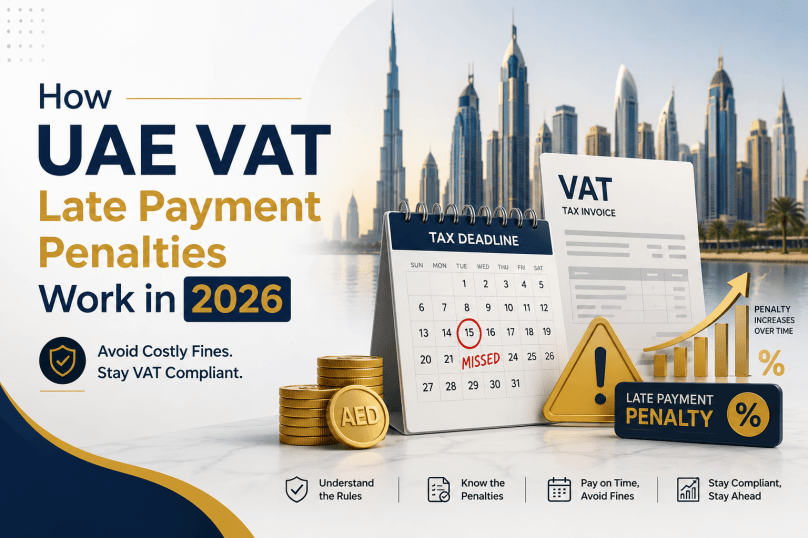
VAT compliance has become an important part of running a business in the UAE. Since the introduction of Value Added Tax (VAT), businesses are expected to file returns accurately and pay taxes on time.
However, many companies still face challenges with delayed VAT payments, missed filing deadlines, or incorrect submissions. In 2026, UAE tax regulations continue to focus heavily on compliance and financial transparency.
Understanding how UAE VAT late payment penalties work can help businesses avoid unnecessary fines and maintain smoother operations.
What Happens If VAT Is Paid Late in the UAE?
When a business fails to pay VAT before the deadline set by the Federal Tax Authority (FTA), penalties may apply automatically.
Late VAT payments can result in:
- Administrative fines
- Additional percentage-based penalties
- Increased compliance scrutiny
- Operational complications
Even businesses with valid trade licenses can face financial penalties if tax obligations are not handled properly.
Understanding UAE VAT Penalties in 2026
The UAE government continues maintaining strict compliance procedures to ensure businesses meet their tax responsibilities.
VAT penalties may apply for:
- Late VAT registration
- Delayed VAT return filing
- Late VAT payments
- Incorrect tax calculations
- Missing financial records
In many cases, penalties increase if delays continue for longer periods.
Why Businesses Miss VAT Deadlines
Many businesses miss VAT deadlines because of:
- Poor accounting management
- Cash flow issues
- Lack of tax knowledge
- Manual bookkeeping errors
- Incomplete financial records
Small businesses and startups are especially vulnerable because they may not have dedicated accounting teams.
As businesses grow, VAT compliance becomes even more important.
How Businesses Can Avoid VAT Penalties
The best way to avoid UAE VAT penalties is through proactive financial management.
Businesses should:
- Track VAT deadlines carefully
- Maintain organized records
- Use professional accounting systems
- Review VAT calculations regularly
- Monitor payment schedules
Working with experienced consultants and financial advisors can also help businesses reduce compliance risks.
Why Professional Support Matters
VAT regulations and compliance requirements can sometimes become confusing, especially for new businesses and foreign investors operating in the UAE.
Professional business support firms like ReCorporate help businesses:
- Understand UAE compliance requirements
- Manage company documentation
- Improve operational organization
- Support smoother business operations
Professional guidance can help businesses avoid costly administrative mistakes and maintain better regulatory compliance.
The Growing Importance of Compliance in the UAE
The UAE continues strengthening its financial and tax systems as the country expands its position as a global business hub.
Businesses are now expected to maintain:
- Better financial transparency
- Organized accounting systems
- Accurate reporting
- Strong compliance standards
Companies that ignore compliance responsibilities may face higher operational risks over time.
How Technology Is Improving VAT Management
Many businesses now use digital accounting and financial management systems to simplify VAT operations.
Modern systems help businesses:
- Automate calculations
- Track deadlines
- Generate reports
- Reduce manual errors
- Improve financial accuracy
Technology is becoming an essential part of modern compliance management in the UAE.
Conclusion
UAE VAT late payment penalties can create unnecessary financial pressure for businesses if compliance is not managed properly.
As regulations continue evolving in 2026, businesses must focus on timely tax payments, accurate reporting, and organized financial management.
Strong accounting systems, proper planning, and professional support can help companies avoid penalties and operate more efficiently.
Businesses working with experienced consultants like ReCorporate can simplify operational processes and maintain better compliance standards while focusing on long-term growth in the UAE.
Frequently Asked Questions
1. What happens if a business pays VAT late in the UAE?
Businesses may face administrative fines, additional penalties, and increased compliance reviews from authorities.
2. Why do businesses receive VAT penalties?
Common reasons include delayed payments, late return filing, incorrect calculations, and poor financial record management.
3. Can small businesses receive VAT penalties in the UAE?
Yes. VAT regulations apply to eligible businesses regardless of company size.
4. How can businesses avoid VAT late payment penalties?
Businesses can avoid penalties by maintaining organized financial records, tracking deadlines, and using proper accounting systems.
5. How does ReCorporate help businesses?
ReCorporate helps businesses simplify operational processes, improve organization, and support smoother compliance management in the UAE.